Hunting / Cold-weather gear
How to keep your feet warm while hunting
Build a boot-and-sock system for the way you hunt—from climbing with a pack to sitting in a cold duck blind.
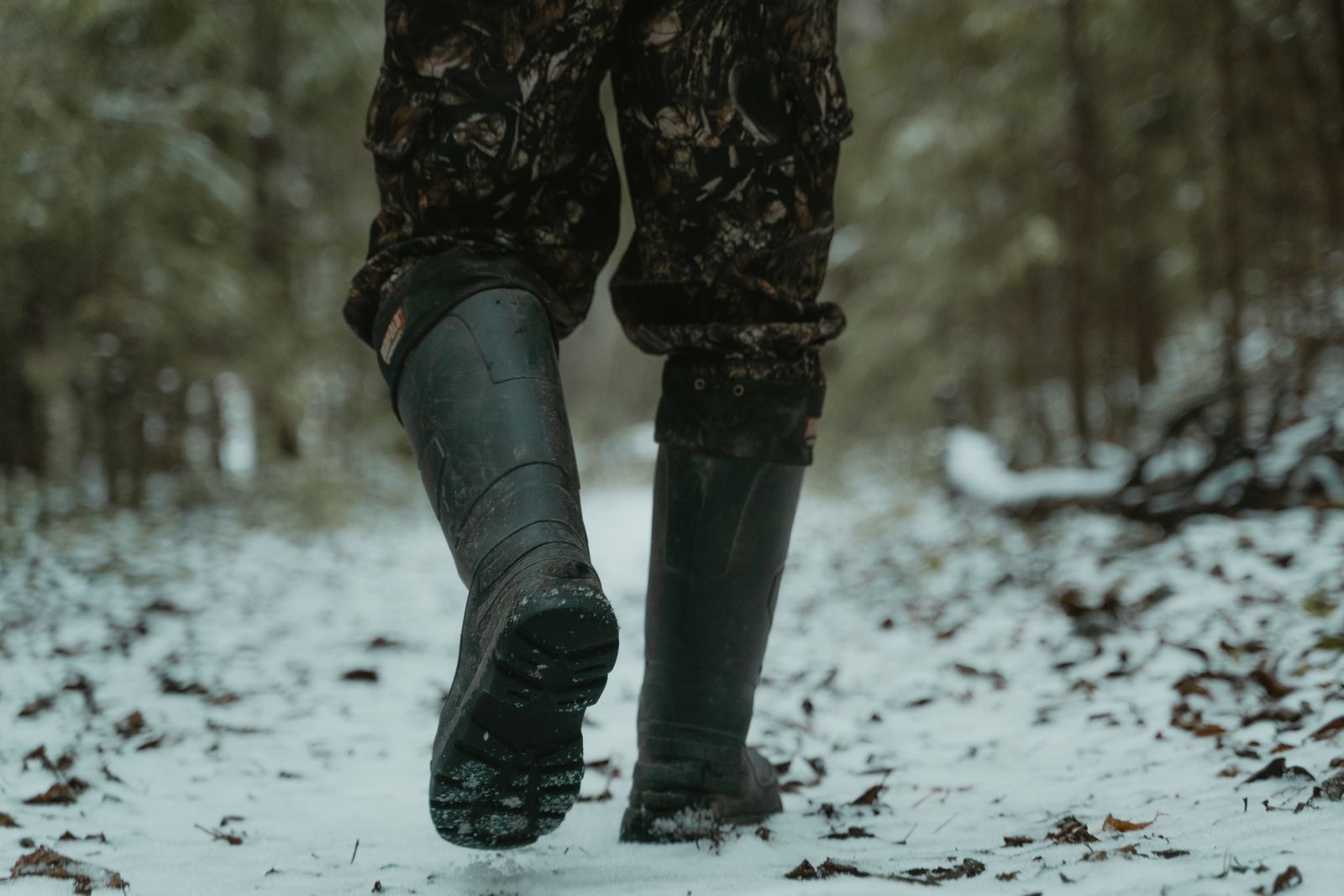
A steep approach and a long wait in the blind ask different things of your boots. Before buying a warmer pair, think through the whole outing: how far you will walk, how long you will sit, and where moisture could get in. The goal is a system that still works when you stop moving.
1. Plan for both the walk and the wait
A mountain hunt can mean a hard climb followed by a long glassing session. A waterfowl morning might mean a short walk followed by hours on cold ground. Pick footwear for that combination, rather than for the temperature at the truck alone.
| Hunt | Priorities | Watch for |
|---|---|---|
| Big game and backcountry hiking | Secure fit, support for the load, and traction suited to the route | Too much warmth on the climb; heel movement or toe pressure on descents |
| Waterfowl and wet-ground hunts | Water protection and warmth during the wait | Water over the boot opening; assuming tall boots can replace waders |
Insulation weights are not universal temperature ratings. Neither boot below comes with a promise that your feet will stay comfortable for a certain number of hours in a particular temperature.
2. Get the sock-and-boot fit right
Try boots with the socks you actually plan to wear. Your toes need room without your foot sliding around. Adding a second thick pair can crowd a boot that fitted correctly with one pair. Walk indoors and check the fit before committing to a trip; follow the seller’s return conditions.
Choose wool or synthetic socks for moisture management, and carry a dry spare pair. Keep it sealed away from wet gloves and other damp gear. Our dry-gear packing guide explains how to organize that reserve.
Sock option: Darn Tough 2013 Hunting OTC Heavyweight
This over-the-calf, full-cushion sock uses a merino-wool blend and offers substantial cushioning for cold-weather use. It is an option for tall boots when there is enough room for its thickness. A heavyweight sock is not automatically the best choice for a strenuous approach or a close-fitting boot.
Check Darn Tough’s size chart and try the complete combination. The supplied Amazon link opens the Green/Forest, Large option; select your own size.
As an Amazon Associate I earn from qualifying purchases.
3. For big game: balance support and insulation
Think about the route with your hunting pack loaded, not just a quick walk across the yard. Give yourself time to assess fit on shorter outings before taking new boots into the backcountry. A boot that feels secure on level ground can behave differently on a long descent.
Boot option: Kenetrek Mountain Extreme 400
The Mountain Extreme 400 has 10-inch leather uppers, a waterproof Windtex membrane, and 400-gram Thinsulate insulation. Kenetrek specifies a supportive nylon midsole for heavy pack loads. That makes it a candidate for cold-weather big-game hunting and backcountry hiking where a supportive lace-up boot suits the route.
This is a substantial mountain boot, not a lightweight trail shoe. Prioritize fit and break-in, and consider whether insulation suits your activity level. The linked listing opens a men’s size 10; verify size and width before ordering.
As an Amazon Associate I earn from qualifying purchases.
4. For waterfowl: prepare for the stationary part
Plan where you will stand or sit and how you will get there. A dry field edge, muddy bank, and flooded timber are different situations. Tall waterproof boots only protect within their coverage; deeper water requires appropriate wading equipment and a separate safety plan.
Boot option: Muck Arctic Pro
The Arctic Pro is an insulated, waterproof pull-on option for cold, wet conditions. Its neoprene construction and fleece lining suit a different job from a lace-up mountain boot. We would consider this style for wet-ground waterfowl hunts with less sustained climbing, rather than treat it as an interchangeable backcountry hiking choice.
Check calf fit, heel movement, and room for your hunting socks. The supplied link opens the Bark version labeled men’s 9 / women’s 10. Choose your size and confirm the exact variant. These are boots, not waders.
As an Amazon Associate I earn from qualifying purchases.
Build the rest of your kit with our morning duck-hunt checklist.
5. Manage moisture before settling in
Keep your pace and clothing layers appropriate for the approach so you do not arrive soaked in sweat. If socks become damp, change into the dry pair under shelter before a long stationary stretch. Keep your torso warm too; foot comfort depends on more than footwear alone.
Use appropriate gaiters when snow could enter over the top of hiking boots. After the outing, open up the footwear and dry it according to its manufacturer’s care instructions. Check the lining before the next morning rather than assuming the outside tells the whole story.
Before leaving the truck
- Fit: can you move your toes without your heel slipping?
- Dry reserve: is a spare pair of socks protected inside your pack?
- Route: does the footwear suit the terrain and expected water depth?
- Wait: have you planned for the time you will spend still?
- Return: can you shorten the outing if conditions exceed your gear?
Do a short local outing with the complete setup before relying on it far from shelter. Buying the warmest-looking boot is less useful than finding the combination you can walk in comfortably and keep dry.
Sources and editorial notes
Reviewed October 15, 2026. These are researched product options, not Timberwake field-tested reviews. Confirm current specifications, sizing, and availability before buying.