General gear / Coolers
What size cooler do you need for a day trip?
Make room for the ice—not just the drinks. Then choose a cooler you can actually carry.
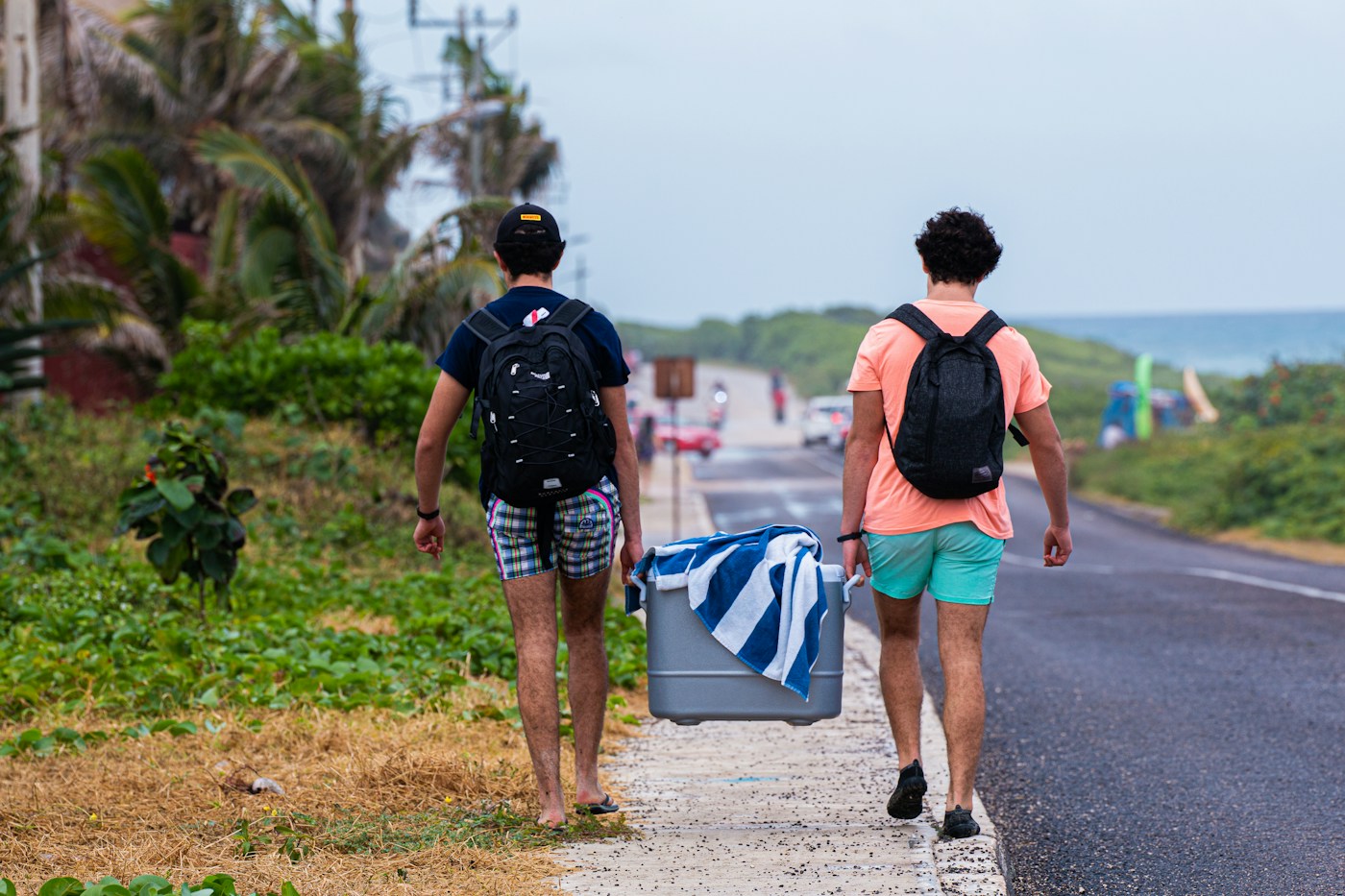
A cooler for lunch at the dock does not need to solve a week-long camping trip. Start with what you take on a normal outing, then check usable space, carrying weight, and where it will ride. This is a researched selection guide, not a ranking of coolers we have tested.
1. Lay out one real day’s supplies
Set out the drinks and food containers you expect to bring. Include lunch, snacks that need refrigeration, and any extra food for a longer-than-planned afternoon. Bulky sandwich containers and tall bottles can matter more than the number of people.
Try the load in a cooler you already own or borrow. Photograph what fits with ice included. That gives you a much better shopping reference than guessing from an empty cooler on a shelf.
| Your typical outing | What to compare first |
|---|---|
| Solo lunch or a short outing for two | Compact cooler, approximately 15–25 qt; check lunch-container fit |
| Two people with meals and plenty of drinks, or a small group | Approximately 25–45 qt; leave space for the cold source |
| Larger group or unusually bulky food | Test a larger size or split the load between two coolers |
These overlapping ranges are a shortlist, not a people-per-quart formula. Hot weather, longer trips, and frequent opening can change what works for you.
2. Check what the capacity number means
Igloo lists cooler capacities in quarts and cans. Quarts describe volume; a can count is a packing example. Check whether the advertised can count includes ice, what can size is assumed, and how the manufacturer measures it before comparing brands.
Also check the interior dimensions. A cooler can have enough total volume but still be too short for your bottle or too narrow for a food container. Baskets and ice packs take space too. Exterior dimensions answer a different question: whether the cooler fits in the vehicle.
3. Budget space for ice
YETI recommends a two-to-one ratio of ice to chilled contents to maximize cold-holding performance. That is a useful reminder that advertised capacity is not all available for lunch. It is a manufacturer’s packing recommendation, not a guarantee of a particular number of cold hours.
As a simple volume illustration, a 30-quart space divided that way leaves about 10 quarts for food and drinks. Real packing is less tidy: container shapes and gaps change the result. Do not treat that arithmetic as a tested loading chart.
Pre-chill the cooler and its contents, keep it shaded when practical, and avoid leaving the lid open while deciding what to eat. Follow the instructions for your cooler and cold source.
4. Think about the carry, not just the capacity
Check empty weight before buying. Then remember that ice, water, and food add to it. Try lifting a comparable load and imagine the actual route: a parking lot, dock, steep bank, or uneven trail.
Look at the handle grip, whether two people can carry it comfortably, and whether wheels suit the ground you use. A shoulder strap may be convenient for a short walk but uncomfortable when heavily loaded. A small cooler you can carry easily may suit a day trip better than a larger one you leave in the truck.
5. Measure its parking spot
Measure the space in your boat or vehicle, including room to open the lid and reach the handle. Make a cardboard footprint if you are unsure. Keep boat controls, walking routes, and safety equipment accessible, and secure the cooler using an appropriate arrangement before travel.
If you are rearranging a small boat, our boat organization guide helps you plan storage around how you move and fish.
Cold food needs a temperature check
USDA advises keeping perishable food at 40°F or below and placing an appliance thermometer in the cooler to verify it. A cold-feeling lid or a brand’s ice-retention claim does not tell you the food temperature.
Keep raw meat in leakproof packaging away from ready-to-eat food. Perishable food should not sit out for more than two hours, or one hour when the outdoor temperature exceeds 90°F. Discard food that has exceeded safe time and temperature limits; do not taste it to check.
Two coolers to compare for these outings
As an Amazon Associate I earn from qualifying purchases.
Compact 15–25 qt range: RTIC 20 QT Ultra-Tough
The RTIC 20 QT is the compact option to consider for a solo lunch or an outing for two. Its 20-quart size sits within our smaller planning range, and its upright-locking carry handle suits a one-person carry. Check your lunch containers against the interior dimensions before buying.
RTIC lists an empty weight of 15.7 lb and interior dimensions of 13.75 × 8.75 × 10.87 inches. That empty weight is worth considering if you have a long walk before adding ice and drinks. Its advertised 30-can capacity is without ice, so do not plan on 30 chilled cans plus your lunch fitting on that basis.
Shopping the 25–45 qt range? Compare the YETI Tundra 45
The Tundra 45 is the larger premium option to compare when you need more room for meals and drinks. It includes a removable dry-goods basket and rope handles for carrying. “45” is the model name, not a verified 45-quart capacity. YETI’s product page does not state a quart capacity, so compare its usable dimensions with your load rather than treating the name as a volume measurement.
YETI lists interior dimensions of 18.3 × 9.4 × 10.7 inches and an empty weight of 24.6 lb. Its advertised 54-can capacity is cans only, without ice. The extra empty weight makes carrying distance and a possible two-person carry part of the decision.
Neither is a hands-on Timberwake test pick. These are product examples for applying the sizing checks above; verify the selected model, color, and current price on the retailer’s page.
Bringing hot drinks too? See our cold-morning coffee guide for a simple bottle-and-cup setup.
Before you buy
- Pack a realistic day’s food and drinks, including the ice or ice packs.
- Check interior dimensions against your largest container.
- Measure the vehicle space and lid clearance.
- Compare loaded carrying comfort, not just empty weight.
- Check how easily the liner, lid, and drain can be cleaned.
Start with the smallest size that handles your regular load and cold source comfortably. Consider a second cooler for occasional group trips before buying one oversized cooler for every outing.
Research and sources
Reviewed October 8, 2026. Capacity ranges above are editorial starting points, not manufacturer performance claims. Product dimensions and empty weights come from the manufacturers; can counts are not ice-inclusive packing examples.